
 Guthrie Theater
Review: Macbeth at the Guthrie
To perform a play is to merge the story told by the playwright into the story of the world as it is to the audience watching. The context becomes an invisible, unavoidable backdrop, as much a part of the show as the sets, the props, and the actors themselves. Deciding how much of that outside world to bring onto the stage–when the play is Macbeth and the setting is downtown Minneapolis in 2026–would have seemed to be an insurmountable task for even the most seasoned directors. Fortunately, the Guthrie was able to lean on the steady guidance of former artistic director, Joe Dowling, to navigate the telling in these troubled times.
The focus of Macbeth is often a meditation on the evils of ambition and the all-consuming rot that spreads from it. One foul act leads to another, each enabling and abetting a worse atrocity until the kingdom is drowning in blood and anguish. In a world already filled to the brim with malice and tragedy, we hardly need to spend more time examining the motivations of the tyrant. Macbeth’s lies and treachery are just the start, soon he suborns others to do his dirty work, and then evil spreads across the land, where “each new morn new widows howl, new orphans cry, new sorrows, strike heaven on the face, that it resounds…” (Act IV.3.4). They are as obvious to us as they would have been to any groundling.
Instead, the relationship between the noble Macduff and virtuous Malcolm is one that bears closer examination. In the face of unspeakable tragedy–the murder of his family by the malign forces unleashed by Macbeth’s tyrannical rule, Malcom redirect’s Macduff’s despair into action, “let’s make med’cines o’ our great revenge,” (Act IV.3.215) “let grief convert to anger; blunt not the heart, enrage it,” (229), “the night is long that never finds the day,” (240). When Macduff eventually goes on to put an end to Macbeth’s reign of terror, he does it not for his own crown, but for Malcom, the contrast is glaring. Macduff’s desire for justice is the antithesis–and ultimate undoing–of Macbeth’s quest for power. The symbolism of the moment is so obvious, further elaboration risks straying into the baroque, but it is rare to have the opportunity to reflect on historic times through the lens of a play bordering on 450 years old. Will history look at how Minneapolis met the moment as inevitable, foretold by fate?
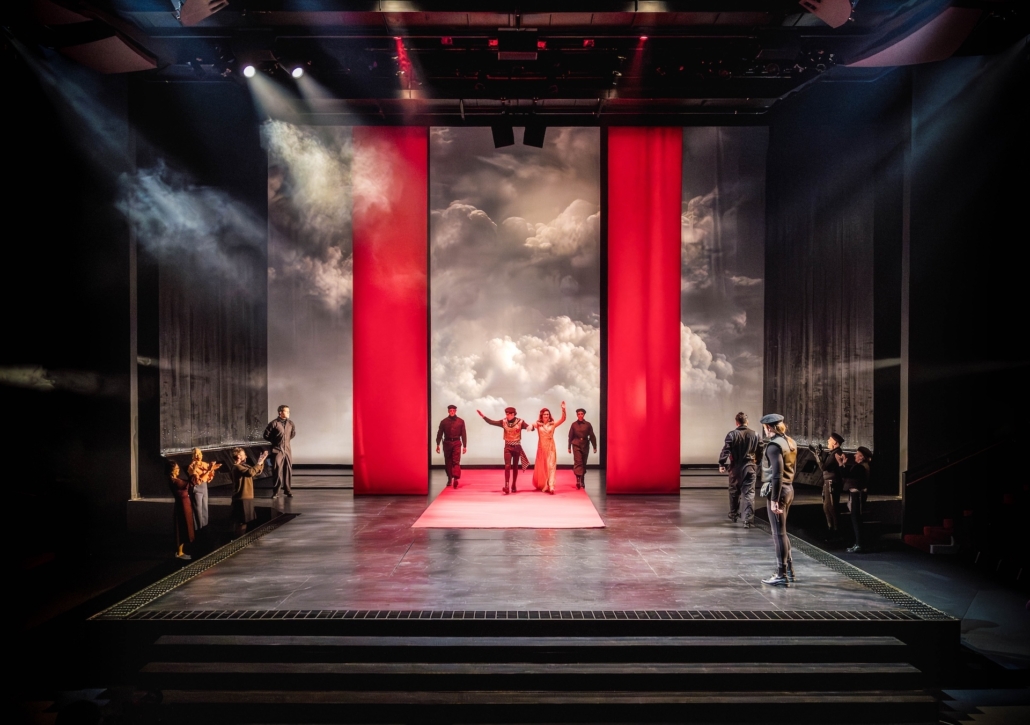
It almost goes without saying that the performances of the actors in the Guthrie’s staging of the Scottish Play are superb, but Daniel Jose’ Molina is a standout in the lead role. Molina caught the attention of many playing Prince Hal/King Henry V in the Guthrie’s marathon production of Shakespeare’s History Plays back in 2024. The sinuous Molina brings an equally lean take on the Scottish lord, paring back the guile and subterfuge to reveal a man so desperate for certainty that you can see him grappling with the paradox as he succumbs to his fate. Macbeth is as much a tale of partnership as it is of ambition, and there may be none as ambitious as Lady Macbeth, portrayed with relish by Meghan Kreidler. The chemistry of Molina and Kreidler is palpable, thoroughly delivering their co-dependency as a power play for the ages.
These are undoubtedly challenging times, but the ability of the theater to hold a mirror before us has never been more clear. Full of sound and fury, signifying… everything.
Macbeth is at the Guthrie Theater in Minneapolis through March 22, 2026.
Photo by Dan Norman
